


Girlhood at the Epicenter of Alternative Music’s Mainstream Moment
Hole’s Melissa Auf der Maur looks back lucidly on her 1990s in “Even the Good Girls Will Cry,” as I seek out memoirs by levelheaded women artists from the generation before mine.


Courtney Love’s feminist punk group Hole might be the only famous rock band to have every living member besides the lead singer write a memoir. I’m trying to avoid a bad Live Through This joke, but the undeniable context is that the white-hot intensity of being in Hole and around Love left its members with stories and scars. Drummer Patty Schemel offered her gripping account of heroin addiction and homelessness in Hit So Hard. Guitarist/cofounder Erik Erlandson released a collection of prose poems grieving his friend Kurt Cobain. And just recently, bassist Melissa Auf der Maur released Even the Good Girls Will Cry, a mostly nostalgic chronicle of her 1990s spent in and out of Hole, the Smashing Pumpkins, and the Montreal music scene.
Auf der Maur’s stint in the Hole spanned 1994’s Live Through This tour (mounted months after Cobain’s suicide and earlier bassist Kristen Pfaff’s overdose) through the making of and touring behind 1998’s Celebrity Skin (Hole’s commercial apex, also Love’s rehab and Schemel’s devastating relapse). In these pivotal years, we get to see Courtney through the eyes of her close friend: grieving in the bedroom of her Seattle mansion, then backstage ready to shock (she smokes a cigarette out of her pussy as a parlor trick). In private, Love comes across as more emotionally intelligent than one might expect for a professional hurricane, particularly in her letters and gestures towards Auf der Maur.
This is not to relegate Melissa Auf der Maur to the sidekick role in her own memoir, but as her therapist points out, she’s “always at the fringes of other people’s dramas.” That is the perfect place for a photographer to be, though. Auf der Maur dropped out of college to join Hole while studying photography, and her camera is a constant source of inspiration while out on the road. Her writing takes on the effect of flipping through a photo album; it’s not so vivid on the senses in a “you’re in the room” kind of way, but you get an earnest sense of the scene and its characters.
Auf der Maur frames her musical career as an alt-rock Cinderella story. In the early ’90s, her Smashing Pumpkins fandom led her to strike up a friendship with Billy Corgan. This happened largely through letters, including one she sent his record label with a request to open for the Pumpkins in Montreal with her band Tinker (spoiler: it worked). She calls Corgan her “spiritual fucking cowboy” throughout the book, and she follows his guidance for a solid decade, including a brief stint in the Pumpkins at the end of the ’90s.
The minute Corgan suggested Auf der Maur for the Hole gig in ’94, she became embroiled in something even messier than the band: the saga of Billy and Courtney, ex-lovers turned part-time collaborators and full-time frenemies. (Technically, Auf der Maur got involved in ’91 when she first met and had the briefest of flings with Corgan, who was heartbroken over Love.) Erlandson and Love both asked Auf der Maur if she was fucking Billy in her job “interview,” an intimidation tactic in itself. But Love would soon cast the 22-year-old redhead as her spiritual foil—the nice Canadian girl to her West Coast hell-raiser, the younger sister she could playfully tease onstage and pull out of her shell. Auf der Maur was transformed by the experience, and Even the Good Girls Will Cry shows her coming into her own witchy womanhood while at the epicenter of alternative music’s mainstream moment.
Her access to some of the biggest personalities in ’90s alternative and their attendant psychodramas would make the book worth reading alone. Where else are you going to hear about the fashion show where Donatella Versace offered Courtney and Melissa lines of coke and a line of male models to fuck? Or how about the Chateau Marmont date with Dave Grohl that led to full-blown romance and Auf der Maur’s first orgasm with a dude? Her praise for his strong drummer’s hands will haunt me for years.
Entertaining as they are, the juicy details aren’t what initially drew me to Even the Good Girls Will Cry. As I grow older, I find myself seeking out memoirs by levelheaded women artists from the generation or two before mine. Neko Case’s The Harder I Fight the More I Love You, Kim Gordon’s Girl in a Band, and Kathleen Hanna’s Rebel Girl all come to mind. Basically, the opposite of the hedonism punctuating classic rock-guy memoirs of yore. I’m not looking to be shocked so much as I am sussing out alternative models of how to age as a creative person. Or hoping to absorb some awe and perspective from musical foremothers for my long journey.
What ends up fortifying me, most often, is the glimpse into other women’s paths on the way up. How there are endless ways to get there and to keep going. You spend hundreds of pages getting to know the writer from childhood onwards, and you can’t help but see them that way even as they become famous and start to appear larger than life. Sometimes, like in Case and Hanna’s memoirs, it seems a miracle that they were able to escape their dysfunctional families at all; their perseverance inspires, and my bond with their music only grows stronger.
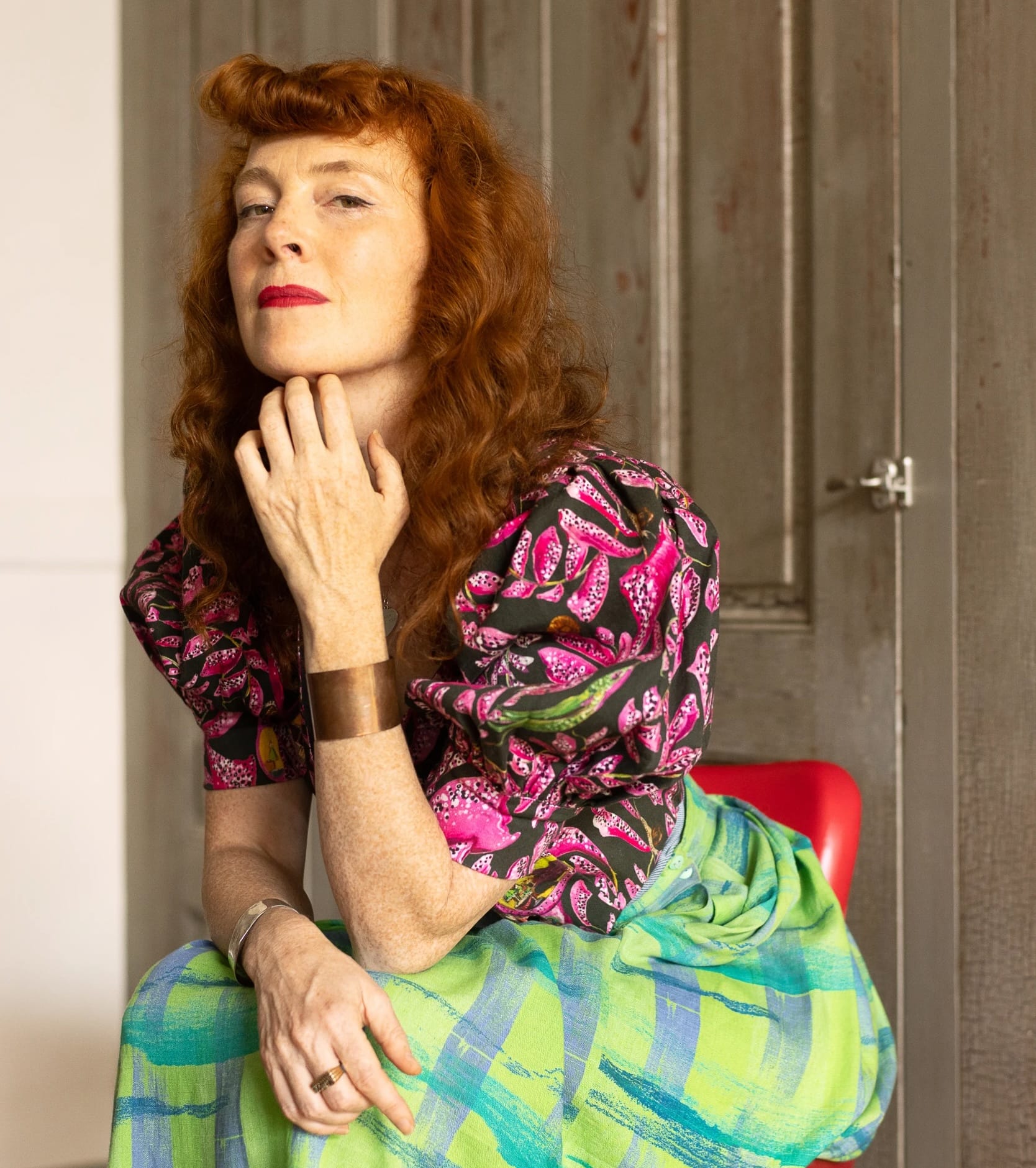
In Auf der Maur’s case, I was totally charmed by her boheme backstory, starting with her unconventional family life. Her feminist-writer mother Linda Gaboriau decided to get pregnant via one-night stand, and Melissa did not know that her father was Nick Auf der Maur, a Montreal newspaper columnist and politician, until she was three years old. Some of my favorite passages of the book have to do with her relationship with Nick, who was more of a friend than a conventional dad, thanks to his barfly about town lifestyle (though he and Linda were briefly married). By her accounts, Auf der Maur grew up in a progressive, arts-filled bubble within English-speaking Montreal; a life in rock’n’roll starts to make sense.
Melissa is several years deep into Hole when Nick is diagnosed with throat cancer, and she does her best to manage both. Following a surgery that left Nick unable to drink, smoke, and talk normally, she overhears him on the phone trying to arrange a swifter, less-painful exit from this earth; he’s only in his mid-50s. She simply asks to be included when the time comes, and the scenes in his house of the final hours and the aftermath are among the most vivid and heartbreaking.
The experience of having a public-facing father prepared Auf der Maur for a life near the spotlight, as a sidekick to more overt attention-seekers (or, as Love once put it, “Billy Corgan’s purse”). But never does she come across as a shrinking violet to whom this crazy life merely happened. Starting in her teen years, she gives herself over to the higher cosmic calling of alternative music. She DJs at or frequents small rock clubs most nights a week. She earns the respect of the rock dudes, who seem to accept her as their own. Eventually Nick buys her a fancy bass, and the formation of her band Tinker isn’t far off. Auf der Maur is weirdly good at capturing the can-do attitude of her youth; one gets the feeling she’s like that still (in a very cool post-rockstar life, she runs the arts venue Basilica Hudson).
It’s inspiring that, even in a male-dominated scene, a teenaged Auf der Maur had total faith that she would achieve her dreams. Later, sensing that love might not be enough, she has the faith to walk away from Hole, the Pumpkins, and her relationship with Grohl. Maybe it’s the Swiss Catholic mysticism that runs in her blood, or her mother’s fierce independence, but Auf der Maur’s gut perpetually keeps her out of trouble. I guess good girls go with their intuition.


