


Where Emily A. Sprague Is Coming From
The Upstate New York singer, songwriter, and producer takes us through her childhood home, and talks about how she’s achieved an independent music career marked by sincerity and grace.


“Hey, get off the property!” a burly man hollers across his yard. Then he cracks a smile and laughs a hearty laugh worthy of Old Saint Nick. Emily A. Sprague’s dad, Mike, walks over to say hi to his daughter, who’s spending a late-summer day showing me her past and present, and how they intertwine.
The property in question is in a rural hamlet at the foot of the Catskill Mountains, about three hours north of New York City. This is the tiny, two-story house where Mike and his wife Margie took up residence nearly 40 years ago. It’s where they first brought baby Emily home in 1994, where they put on the Beatles, Mozart, and jazz albums to ease their fussy infant’s trips to dreamland.
Behind the house is a rickety wooden shed where Emily and her band Florist recorded their first EP of starkly introspective indie-folk in 2013, following a couple of years of the group’s members “bonding over analog synthesizers and psilocybin,” as she once put it. Keep walking a hundred feet or so, crunching leaves underfoot, and you’ll hit the murmuring creek that Emily calls a “main character in my life.” She says this in the same way she says everything, calm and open, her thoughts wandering through the space between the top of the sky and the crumbly dirt below. As an only child, this patch of land is where she embarked upon adventures alongside scores of imaginary creatures. She eventually took the sounds and solace she found in nature and transmuted it into humbly reassuring ambient records released under her own name.
This is the property where Emily lived the first 17 years of her life. The place that, as a teenager, she couldn’t wait to escape. It’s also the house she found herself returning to once again five years ago. Today, Emily and her partner, the independent filmmaker V Haddad, live with their scraggly rescue dog Sparkles in a home of their own only about a mile away.

Corus is a social app for sharing and discovering music. Post your favorite songs and match with people that share your taste. Follow @hearingthings on the app too!
Standing at the back fence, Mike offers us some freshly brewed coffee. “You wanna see where she grew up?” he asks cheerfully, inviting me inside. I glance at Emily, who still looks like the nerdy skater she was in high school, in an oversized hoodie and wire-framed glasses, with dyed blond hair growing out below her ears. She seems less enthused by the idea of letting a journalist tour the innards of her childhood home. But sensing her dad’s excitement, she quickly acquiesces.
In his early 70s, Mike has the infectious energy of a man decades younger. Talking about her dad on the car ride over, Emily told me, “He does more work than I do in a week, and I’m exhausted. It’s amazing. He definitely taught me a lot about finding joy in life.” When we catch Mike around noon on a Wednesday, he’s busy preparing to head out for his shift as a cook at a local beer garden called Subversive.
In the house, the radio is playing from a vintage hi-fi system at a healthy volume. A couple of dogs dart along the floorboards, and there are spider plants hanging from every possible corner. “They give off the most oxygen of any houseplant,” Mike notes. There are posters espousing peace and love on the walls, along with one for counterculture hero Hunter S. Thompson’s 1970 campaign to be sheriff of Aspen, Colorado. It turns out Mike knew Thompson and even hung out at the gonzo writer’s notorious Owl Farm compound in the ’80s. It immediately becomes clear Mike has plenty of stories from his past to tell, but on this day, he’s more interested in talking about his daughter. He mentions that Emily came along later in life, when he was 40. “We waited a long time for that, many trials and tribulations,” he adds, his voice trailing off. “It was a gift.” He then laughs his big laugh and asks me, “You want to open a bottle of wine?” A pause. “I’m only kidding!”
Above one couch there’s a set of framed album covers taken from Emily’s substantial catalog. It’s a body of work that dates back more than a decade, containing the songwriter’s ruminations—at once poetic and matter-of-fact—on her own trials and tribulations. The discography includes Florist’s debut album, The Birds Outside Sang, from 2016. Throughout that record, Emily chronicled the aftermath of a devastating bike accident that occurred a few years earlier, when she was struck by a box truck while riding up Manhattan’s West Side. Near the beginning of the album, in a fragile and holy tone, she sings, “I can’t feel my left side hand, god I hope it comes back to me again.” After a few months in a neck brace, she was finally able to move her fingers. It took about a year for her to fully recuperate. The record ends with all the awful wonder of a near-death experience, summed up in two neat lines: “I thought that I saw the other side/But it was only sunlight in my eyes.”
There is Emily Alone, in which she reflected on her mother Margie’s passing in terms both gutting and cathartic. When her mom died in 2017, Emily was only 22; Margie was only 56. On a song called “Celebration,” atop circular fingerpicking, Emily sings, “She’s getting tired/She’s leaving home/Rest under the pines/My love forever now.” Margie was a hospice nurse before she became a music therapist. She played the flute for people who were dying or suffering from dementia. When Margie would leave the family house, she would say, “Heading to work with my most precious people.” While driving to the house, Emily told me, in her disarmingly straightforward way, “I just didn’t get enough time with my mom.”
Looking over his collection of framed album covers, Mike speaks about his daughter with awe. He tells me how she played around 100 shows in 16 countries last year, marveling at her work ethic. “I’m so proud of her and all that she’s done and how many people she touches along the way,” he says. “It’s all music therapy.”
Soon, he’ll have to make a space in his fatherly shrine for Emily’s latest solo album, Cyano. The record marks a convergence of her singer-songwriter side, previously only heard with Florist, and her ambient instrumental side. The result is a meditative opus that glides along modular synth tones and melodies that feel both nostalgically sci-fi and homespun. The lyrics are more abstract than usual, as they describe an alternate universe trying to reclaim its purpose amid a kind of societal mind-meld assimilation. It’s a voyage, a balm, and fresh proof that Emily is continuing to find new ways to express her innermost feelings—and to connect with a fanbase of likeminded empaths—as she floats through the existential unknown.
Before we leave the house, Emily implores her dad to eat some breakfast before work. “I’m gonna have a banana,” he says sheepishly. “No, you gotta eat more than that,” she responds, kind but stern. He assures her he will. Then he gives her a bear hug, her slight frame enveloped in his arms.
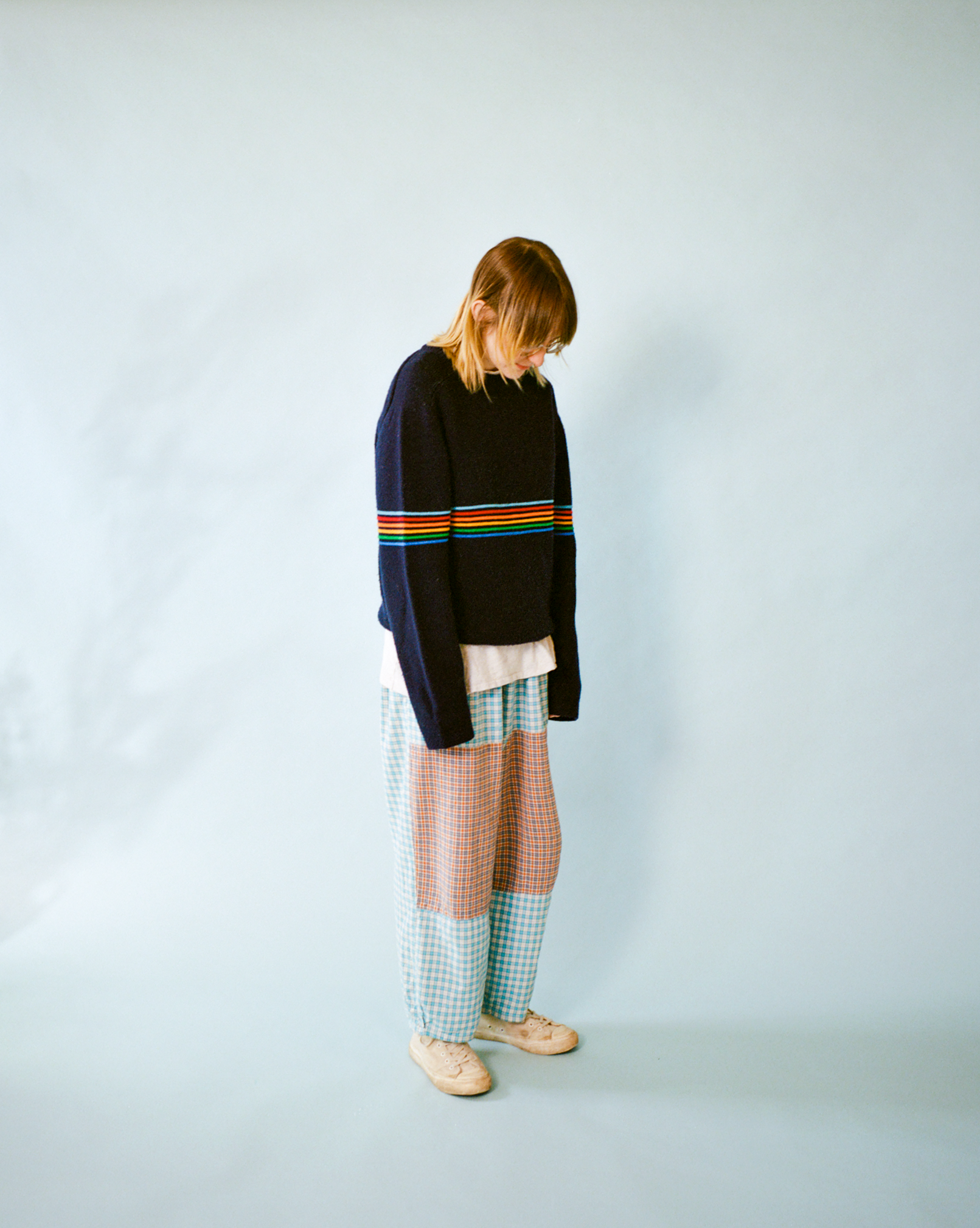
Emily started writing songs at 15, playing guitar in her tiny bedroom with the slanted ceiling, a stuffed Pikachu keeping her company. In high school, music took up the majority of her brain space. She was also a snowboarder, and considered going to a boarding school specializing in the winter sport, though her family couldn’t afford it. And she went to a summer program for would-be filmmakers, but quickly realized it wasn’t the best fit.
“I learned that you need to rely on a lot of people for different things and be very social to make films—and I’m an only child who grew up in the woods, and I almost never enjoy socializing,” she says with a laugh. “Music was the place inside myself that I could go safely, where I don’t always enjoy going with others. It also became a really powerful tool to make sense of everything.”
Some of that everything involved her queer gender and sexual identities. She never wanted to dress like a typical girl, and people in her small community—a mix of hippies and conservatives—would constantly ask her, Why is your hair short? Why do you wear that? Are you a boy or a girl? “It was really fucking annoying,” she says, adding that their prodding felt like a distillation of her nagging, internal sense of otherness. Her own mom and dad weren’t judgemental, but the constant questioning of teachers, kids, and their parents made her feel dysphoric. At the same time, she was starting to reckon with being queer, further complicating her adolescent psyche. She knew what she felt, but she was also scared of getting called out in a place where settling down and having kids seemed like the only acceptable option.
One day in the late 2000s, when she was around 14, Emily logged onto Myspace and wrote, “I’m genderqueer.” She had read about the identity online, and it resonated with her. “I was like, I’m both and neither, and that feels true to me,” she recalls. The post was clarifying for her, but it also led to even more misdirected concern and fear from people who barely knew her. “The fact that we as a society didn’t have a way to talk about someone’s individual experience with nuance and a full scope of acceptance—that your experience is valid and deserves to be treated with care and respect—is so sad,” she says. “It’s better now, but clearly still not perfect.” At this point, she says, “I don’t really have a strong preference to identify any which way these days. I do feel I am definitely a queer person across the board, and my identity feels very much fluid more than anything.”
An early breakthrough for Emily as a performer came when her beloved high school music teacher, Mr. G, encouraged her to audition for the annual musical. At first, she wasn’t into the idea—she was a shy skater, not a dramatic musical-theater kid. But Mr. G persisted, wanting her to experience the vulnerability of being on stage. So she tried out—for the title role of Peter Pan. She got the part, beating out a lot of boys who also wanted to be the one wearing that little green cap. When I ask her if it was hard to reconcile her teenage rebellious streak—she once made a short film about why college is bad, after all—with something as uncool as the high school musical, she shrugs and says, “You just have to make it cool.” Playing Peter Pan was her first real experience on a stage, and she liked the freedom that came with being someone else. “It felt like an escape from the very real part of me that always wanted to hide,” she says. “Being able to reclaim that was empowering. To a degree, I still feel that way when I perform.”
At 17, as other kids in her school were drawing up their college applications, Emily graduated early, moved out of her parents’ house, and began to pursue the life of a DIY musician in earnest. Friends’ parents thought she was going down the wrong path, and she was eager to prove them wrong. She rented an apartment for $250 a month, got a job at a sandwich shop, and started playing shows. She never felt like she belonged in her hometown, so she left as soon as she could. At the time, she remembers thinking, There’s gotta be other people like me out there.
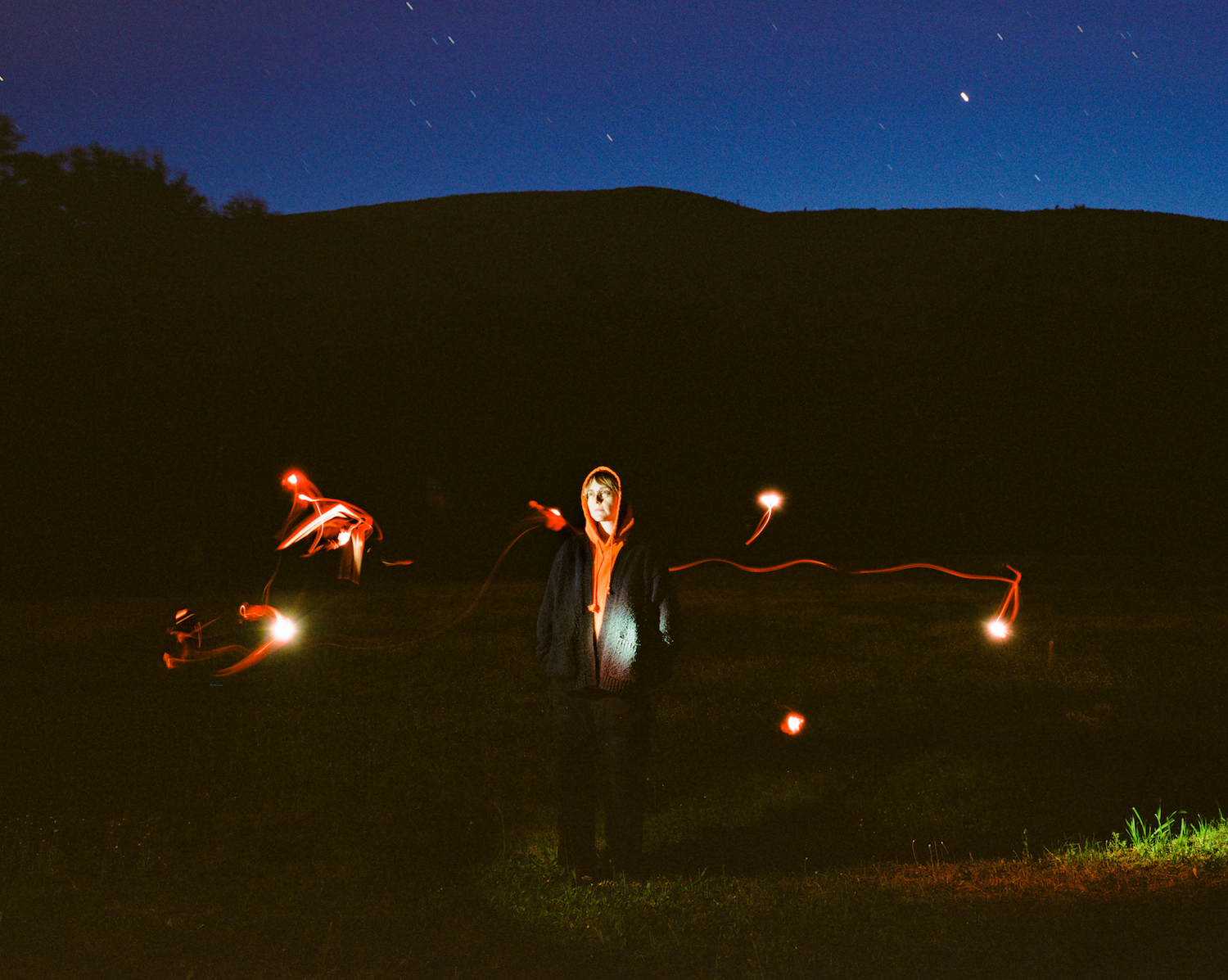
Over the next decade, she found those people in places like Albany, Brooklyn, and Los Angeles. With her friends in Florist, she’s played scuzzy venues in Bushwick and outdoor festivals in Germany. Their music was featured in Beyoncé’s concert film Homecoming and director Jane Schoenbrun’s queer coming-of-age touchstone I Saw the TV Glow. Rave reviews. Tiny Desk. She’s done it all, without sacrificing a shred of dignity along the way. She never signed her masters away. She declined to license her music for TV and film projects she didn’t believe in, like cop shows. She currently doesn’t have a manager.
“My reflex to reject the business part of music and what’s tainted with corporate greed is pretty strong,” she says. “I’ve definitely turned down a lot of opportunities to pursue a career that would give me more staying power—in a personal way, with my mental health—and to keep doing this the way that I want to be doing it.”
Emily tells me this sitting in the open-plan heart of her and her partner V’s house, just down the road from her childhood home. When she left Greene County in her teens, she never expected to move back. In the intervening years, she had established an identity based on her independence from this place and all of its unmooring memories. But after her mom’s death, her bond with her father grew even stronger. “I’m here for my dad and what it means for us to be together,” she says plainly, adding that she and V have dinner with him at least once a week. “He’s our best friend.”
During the pandemic, she drove from L.A. all the way back here with V and Sparkles. They stayed with her dad for six months while trying to find a permanent living situation, which was made more difficult by an influx of city types inflating real estate prices throughout the area. One day while walking the dog, they ran into a couple of neighbors who told them about a local carpenter who was building a house as a retirement project. They called that carpenter the next day, and he offered to sell them the house without putting it on the market. Emily and V cobbled together some savings—including a sum of insurance money Emily was awarded following her bike accident—Mike co-signed the mortgage, and they were able to close on the property with an enviably low interest rate in 2021. “It feels like a miracle,” Emily says.
From the outside, the house looks like an imposing black box; inside it’s white and airy, with huge windows offering a view of the forest out back. It’s split into a few distinct zones. There’s Emily’s self-described “nerd zone,” where she plays Zelda games on various Nintendo consoles and watches fellow gamers on Twitch. She counts the cozy farm simulation Stardew Valley as her favorite all-time game, to the point that she’s considering buying tickets to a symphonic performance of its soundtrack. Would she ever consider composing her own videogame score? “It’s my number one bucket list item.”
There’s a big kitchen and a spot where she writes songs on guitar. And there’s a studio space she shares with V, where all of Emily’s modular synth equipment is set up. Over the past decade she’s collected dozens of modules and sequencers that create and tweak sound waves, along with a rack of stringy patch cords used to connect the various components. This is where she made Cyano in the winter of 2025, with Sparkles sleepily listening along, and a family of stuffed Mudkip Pokémon looking on from a nearby shelf. All the while, a blown up photo she took of the creek she grew up with hung above her workspace. In the shot, the waterway is rendered mysterious—ominous, even—with tree branches encroaching from all sides.
To create the album’s pebbly and lunar sonic landscape—which was originally inspired by a trip to the northernmost part of Iceland during the darkest time of the year—she experimented for a month, pursuing sounds that were natural but also clearly not. It was a slow and intentional process. Each wired connection and knob turn had to count. She used a module that’s meant to replicate the sound of hitting metal with mallets; she used a weathered sine wave to conjure a worn-out vibe. Once those sounds were set, she recorded the songs almost like a performance, improvising on the synth rig in real time. Even the album’s vocals sound as if they’re being received from an ancient, corroded satellite as they flicker and echo through the blippy expanse.
Cyano is a different kind of album for Emily, darker than her usual solo material and less confessional than what we’ve come to expect from Florist. But it is no less personal or true to who she is now: a human being who often feels like an alien, who finds purpose and meaning in exploring what makes her different. Her music is a beacon for outsiders of every stripe, a place where we can tune into the most vulnerable parts of ourselves, where we can feel less alone.
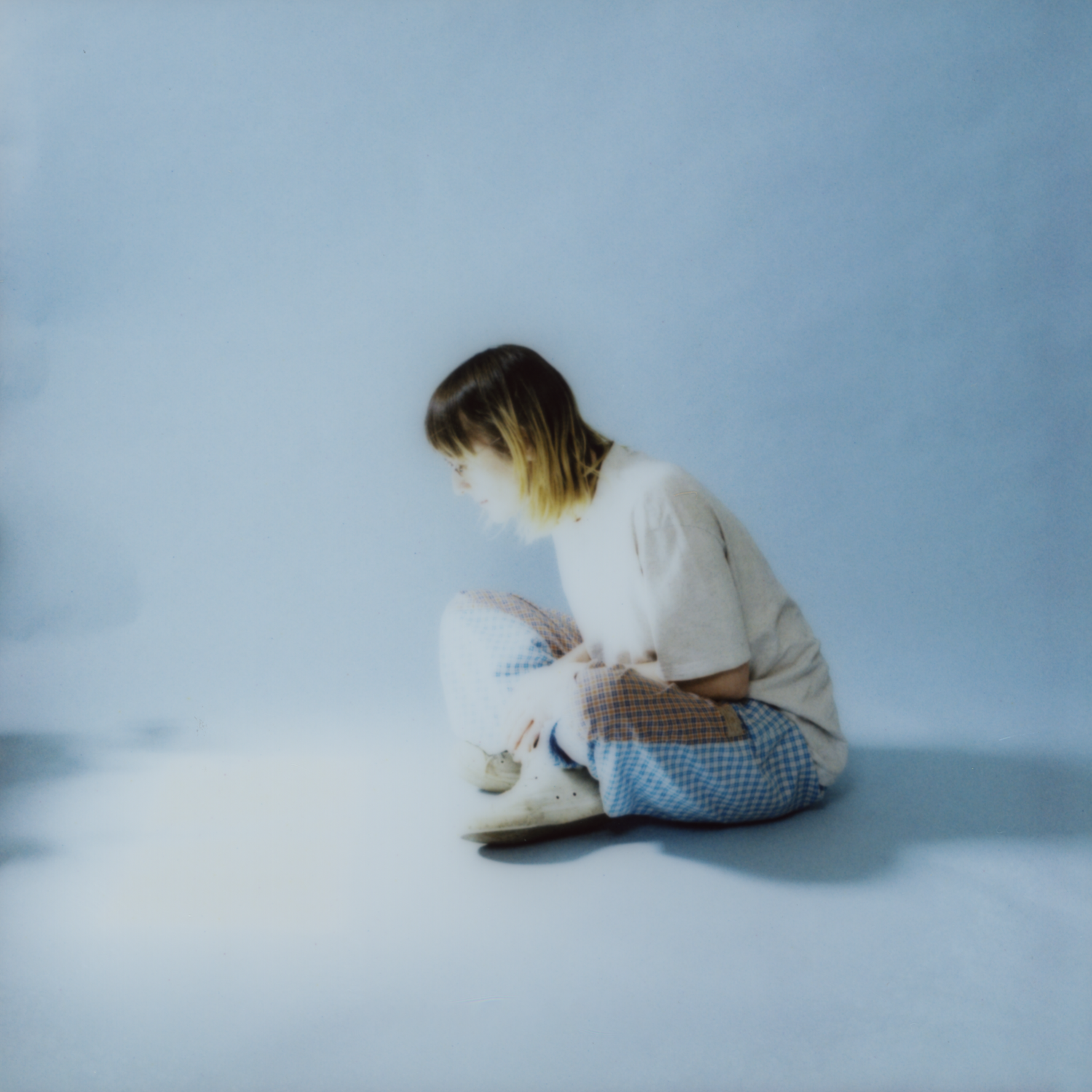
It’s late afternoon when Emily and I hop into her Volkswagen Golf, and she drives me back to the bus station. The interior is coated in a layer of Sprinkles’s hair, and two sprigs of lavender rest on the dashboard. She admits her return to the place where so many ghosts from her past still roam wasn’t easy. “I’ve basically spent the past five years being here trying to get some gray matter back in my brain and reform my relationship to myself,” she says, “and not be so stuck in the things I pity about myself, or things that hurt, or things that I want to avoid.” Over the past year and a half, she finally feels like she finally made it to the other side, with the help of nearby family and friends who deeply understand her.
Talking about the solemn nature of her songs, she says something that’s stuck with me ever since: “Making really emotional, devastating music is why I’m happy.” I ask her if she considers her art to be an extension of her mother’s music therapy work. “I definitely do,” she says. “I like relating to it more as music therapy than some kind of product—I feel like it’s less entertaining than it is nourishing.” She laughs knowingly. Would she ever become a full-fledged music therapist herself? “I’m interested in it,” she says. “For now, this is my version of it.”


